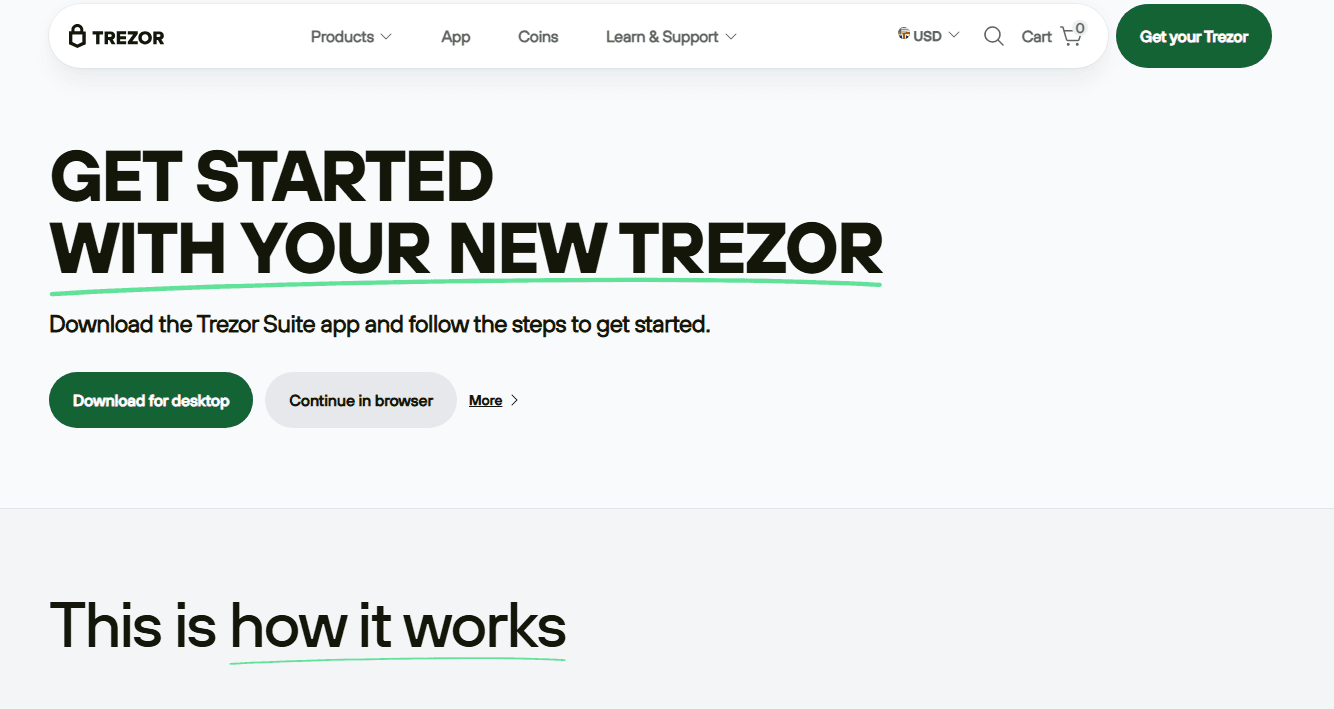
Trezor.io/start: A Step-by-Step Guide to Setting Up Your Trezor Wallet Safely
Cryptocurrency gives users complete control over their money, but this freedom comes with an important responsibility: you are your own bank. There is no help desk to reverse transactions and no institution that can recover lost access. Because of this, how you set up your wallet matters just as much as how you use it.
Trezor.io/start is the official setup portal created by Trezor to help users initialize their hardware wallets correctly and securely. This page ensures that users install authentic software, verify their devices, and learn essential security practices from day one.
This guide explains what Trezor.io/start is, why it matters, and how to use it properly to protect your cryptocurrency.
What Is Trezor.io/start?
Trezor.io/start is the official onboarding page for all Trezor hardware wallets. It acts as a trusted starting point for first-time users and those restoring existing wallets.
Through Trezor.io/start, users are guided to:
Download the official Trezor Suite software
Confirm that their device is genuine
Install or update firmware
Create a new wallet or restore an old one
Learn how to store recovery information safely
Using this page minimizes the risk of falling victim to fake websites or malicious downloads.
Why Starting at Trezor.io/start Is Critical
Many crypto losses happen during setup, not during daily use. Scammers often target new users by offering fake wallet software or convincing them to reveal recovery phrases.
Trezor.io/start helps prevent these risks by:
Providing verified downloads only
Teaching users how to identify genuine devices
Explaining the importance of offline backups
Encouraging safe habits from the beginning
Skipping the official setup page can lead to irreversible mistakes.
How Trezor Hardware Wallets Work
A Trezor hardware wallet is a physical device that stores private keys offline. Private keys are required to authorize transactions on the blockchain. By keeping them offline, Trezor protects users from online threats.
Key features include:
Offline private key storage
PIN-protected device access
Physical confirmation of transactions
Recovery seed backup system
Open-source firmware
Trezor.io/start ensures these features are activated correctly.
Who Should Use Trezor.io/start?
Trezor.io/start is designed for:
Beginners purchasing their first hardware wallet
Users moving funds off exchanges
Long-term investors
NFT and DeFi participants
Anyone serious about self-custody
If you want full control over your crypto, starting here is essential.
What You Need Before Setup
Before beginning, prepare the following:
A new or factory-reset Trezor device
A trusted personal computer
Stable internet access
Pen and paper for recovery backup
Avoid public computers or shared networks during setup.
Step 1: Go to Trezor.io/start
Open your browser and manually type trezor.io/start.
Always verify the spelling and domain. Bookmarking the page helps prevent accidental visits to fake websites.
Step 2: Install Trezor Suite
Trezor.io/start directs you to download Trezor Suite, the official software for managing your wallet.
Trezor Suite allows you to:
Initialize and manage your device
Send and receive cryptocurrency
View balances and transaction history
Manage multiple accounts
Update firmware securely
The desktop version is recommended for better security.
Step 3: Connect and Verify Your Device
Once Trezor Suite is installed:
Connect your Trezor device using a USB cable
Open Trezor Suite
Allow the app to detect the device
Trezor Suite checks whether the device is authentic and untampered.
Step 4: Install or Update Firmware
If the device is new or reset, firmware installation may be required.
Important reminders:
Firmware updates must be approved on the device
Only install firmware through Trezor Suite
Never download firmware from third-party sources
Firmware updates improve both security and functionality.
Step 5: Create or Restore a Wallet
You will be asked to choose one of two options:
Create a New Wallet
Choose this if:
You are setting up Trezor for the first time
You do not have a recovery seed
Restore an Existing Wallet
Choose this if:
You already have a recovery seed
You are recovering funds from another device
Recovery seeds must be entered directly on the hardware wallet.
Step 6: Set a PIN Code
The PIN protects your Trezor if it is lost or stolen.
PIN features:
Entered on the device
Required whenever the device is connected
Device resets after multiple incorrect attempts
Choose a PIN that is secure and memorable.
Step 7: Write Down the Recovery Seed
The recovery seed is the most important part of your wallet.
Typically 12 or 24 words
Generated offline by the device
Shown only once
Recovery Seed Safety Rules:
Write it down on paper
Never store it digitally
Never take photos or screenshots
Never share it with anyone
Anyone with this seed can access your funds.
Why the Recovery Seed Matters
The recovery seed allows you to:
Restore your wallet on a new Trezor
Recover funds if the device is damaged
Maintain ownership without relying on any company
If the seed is lost, funds cannot be recovered.
Optional: Add a Passphrase
Advanced users can enable a passphrase, creating hidden wallets.
Benefits include:
Extra protection if the recovery seed is exposed
Ability to create multiple wallets
Increased privacy
⚠️ Passphrases cannot be recovered if forgotten.
Adding Cryptocurrency Accounts
After setup, you can add accounts for different cryptocurrencies such as Bitcoin, Ethereum, and others.
Accounts help you:
Organize assets
Separate savings from spending funds
Track balances clearly
Sending Cryptocurrency Safely
To send crypto:
Select the account
Enter recipient address and amount
Review details in Trezor Suite
Confirm the same details on the device
Always verify addresses on the hardware screen.
Receiving Cryptocurrency Securely
To receive crypto:
Select the account
Generate a receiving address
Verify the address on the device
Share the verified address
This prevents malware-based address manipulation.
Built-In Security Layers
Trezor wallets use multiple protections:
Offline private key storage
PIN protection
Recovery seed backup
Physical transaction approval
Optional passphrase
Open-source transparency
Together, these layers provide strong defense against common threats.
Common Setup Issues and Solutions
Device Not Detected
Try a different USB cable
Restart Trezor Suite
Use another USB port
Forgotten PIN
Reset the device
Restore wallet using recovery seed
Firmware Problems
Restart device and software
Ensure you are using official Trezor Suite
Best Practices for Long-Term Security
Store recovery seed in multiple secure locations
Never enter recovery seed online
Ignore unsolicited messages or emails
Keep firmware and software updated
Always verify transactions on the device
Security is a continuous habit.
What If Your Trezor Is Lost or Stolen?
Your funds remain safe if:
The PIN is secure
The recovery seed is protected
To recover access:
Get a new Trezor device
Visit trezor.io/start
Restore wallet using recovery seed
Your assets will reappear automatically.
Who Benefits Most from Trezor.io/start?
This setup process is ideal for:
First-time hardware wallet users
Long-term crypto holders
High-value investors
Privacy-focused users
Anyone leaving centralized exchanges
It supports full self-custody and independence.
The Importance of Proper Setup
As crypto adoption grows, proper onboarding becomes critical. Trezor.io/start ensures users begin their journey with the right tools, correct settings, and strong security awareness.
By following official instructions, users significantly reduce the risk of irreversible loss.
Final Thoughts
Trezor.io/start is the safest and most reliable way to set up a Trezor hardware wallet. It ensures your device is genuine, your wallet is configured correctly, and your private keys remain fully under your control.