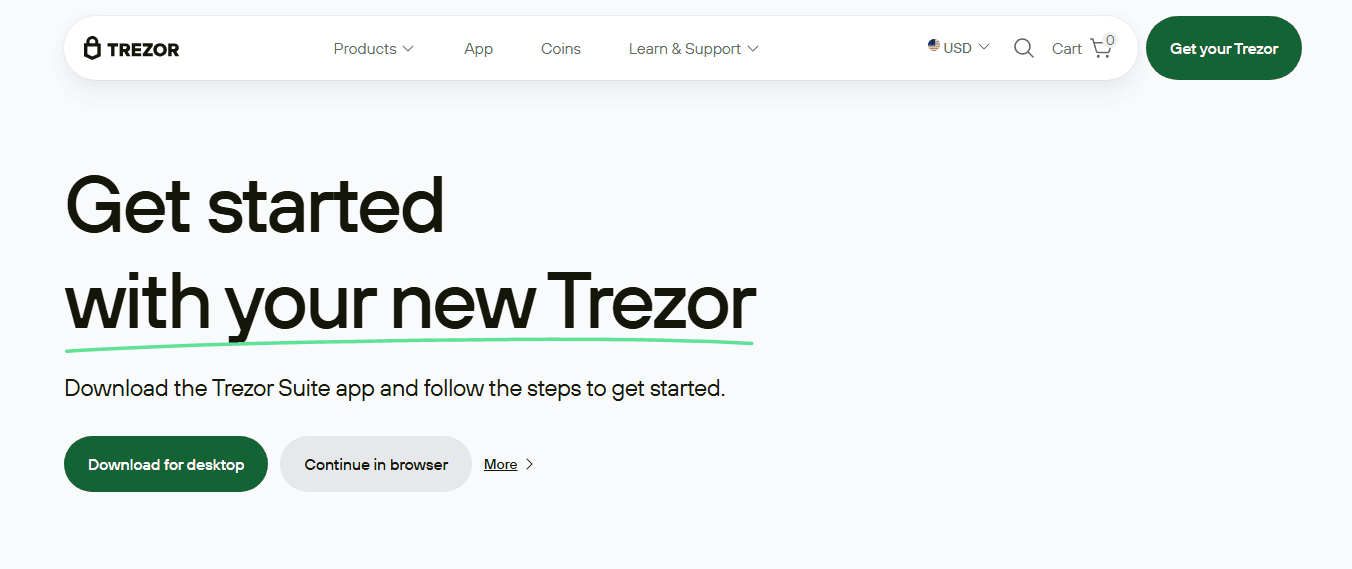
Trezor.io/start: The Ultimate Guide to Securely Setting Up Your Trezor Wallet
Cryptocurrency has revolutionized how people think about money. With crypto, users can hold, send, and receive funds without relying on banks or centralized institutions. However, this independence comes with a major responsibility: your funds are only as safe as your security practices. Unlike traditional banking, there is no way to reverse mistakes, and losing access to your wallet can mean permanent loss of funds.
Trezor.io/start is the official starting point for setting up a Trezor hardware wallet. It ensures that users follow the safest path for initializing their device, installing verified software, managing recovery keys, and learning essential security practices. This guide provides a complete walkthrough of Trezor.io/start and helps users make the most of their Trezor wallet safely.
What is Trezor.io/start?
Trezor.io/start is the official onboarding page for Trezor devices. It is designed to guide both first-time users and returning users who want to restore a wallet.
Key purposes of Trezor.io/start include:
Directing users to download Trezor Suite, the official wallet software
Verifying device authenticity
Guiding firmware installation and updates
Helping users create a new wallet or restore an existing one
Educating users on how to safely manage recovery seeds
Using Trezor.io/start ensures that you are using trusted sources, which is essential for avoiding scams and fake software.
Why Trezor.io/start is Important
Many crypto-related losses occur during wallet setup, rather than during normal usage. Common threats include:
Fake setup websites and phishing scams
Malware that captures keystrokes or modifies transactions
Accidental exposure of recovery seeds
Trezor.io/start addresses these risks by:
Providing verified software downloads
Educating users on secure device setup
Demonstrating proper recovery seed storage
Guiding users to confirm transactions safely
Starting here significantly reduces the risk of errors that could lead to permanent loss.
Understanding Trezor Hardware Wallets
A Trezor hardware wallet is a small, physical device that stores private keys offline. Private keys are what allow you to access and transfer cryptocurrency. By keeping them offline, Trezor significantly reduces the risk of hacks.
Key features include:
Offline private key storage
PIN-protected access
Physical verification of all transactions
Recovery seed for backup
Open-source software
Trezor.io/start ensures that all these features are activated correctly during setup, creating a strong foundation for long-term security.
Who Should Use Trezor.io/start?
Trezor.io/start is suitable for:
First-time hardware wallet owners
Investors moving funds off exchanges
Long-term crypto holders
NFT and DeFi participants
Users who prioritize self-custody
For anyone who wants full control over their crypto assets, beginning at Trezor.io/start is crucial.
Preparing for Setup
Before starting, gather the following:
A new or factory-reset Trezor device
A secure, personal computer
Stable internet connection
Pen and paper for recording your recovery seed
Avoid public computers or shared devices, and do not rely on unsecured Wi-Fi.
Step 1: Open Trezor.io/start
Carefully type trezor.io/start into your browser.
Tip: Double-check the URL to avoid counterfeit sites. Bookmark the official page for future reference.
Step 2: Download Trezor Suite
Trezor.io/start guides you to download Trezor Suite, the official software for wallet management.
Trezor Suite allows you to:
Initialize and manage your Trezor wallet
Send and receive cryptocurrencies
View balances and transaction history
Add multiple accounts
Update firmware securely
For optimal security, the desktop version is recommended over the web version.
Step 3: Connect Your Trezor Device
After installing Trezor Suite:
Connect your Trezor via USB
Launch Trezor Suite
Wait for the software to detect your device
The software will automatically verify your device is genuine and has not been tampered with.
Step 4: Install or Update Firmware
New or reset devices require firmware installation.
Important:
Only approve firmware installation on the device
Download firmware exclusively through Trezor Suite
Avoid third-party sources
Firmware updates enhance both security and functionality.
Step 5: Create or Restore a Wallet
Trezor Suite provides two options:
Create a New Wallet
For new users
Generates a recovery seed
Guides through PIN setup
Restore Wallet
For existing users
Restores previous accounts and balances
Requires entering the recovery seed on the device
Step 6: Set a PIN Code
Your PIN protects the device from unauthorized access.
PIN details:
Entered directly on the device
Required each time the device connects
Device wipes itself after multiple incorrect attempts
Choose a PIN that is memorable for you but difficult for others to guess.
Step 7: Record Your Recovery Seed
The recovery seed is the most important element of your wallet.
Usually 12 or 24 words
Generated offline
Displayed only once
Recovery Seed Safety Tips:
Write it down on paper
Store in multiple secure locations
Never save digitally
Never share it
Anyone with access to your recovery seed can control your funds.
Why the Recovery Seed Is Critical
The recovery seed allows you to:
Restore your wallet on a new device
Recover funds if the device is lost or damaged
Maintain full ownership without relying on any company
Losing the recovery seed can lead to permanent loss of cryptocurrency.
Optional: Add a Passphrase
Advanced users can enable a passphrase to create a hidden wallet.
Benefits:
Extra security if the recovery seed is exposed
Multiple wallets from one seed
Increased privacy
⚠️ If forgotten, the passphrase cannot be recovered.
Adding Cryptocurrency Accounts
After setup, you can add accounts for supported assets like Bitcoin, Ethereum, and more.
Benefits of multiple accounts:
Organize different assets separately
Separate savings and spending funds
Track balances more effectively
Sending Cryptocurrency
Steps to send crypto safely:
Select the account and asset
Enter the recipient address and amount
Review details in Trezor Suite
Confirm the transaction on the device
Always verify addresses directly on your Trezor device screen.
Receiving Cryptocurrency
To receive crypto:
Select the account
Generate a receiving address
Confirm it on the device
Share the verified address
This prevents malware from modifying your address.
Built-In Security Features
Trezor wallets offer multiple layers of protection:
Offline private keys
PIN protection
Recovery seed backup
Physical transaction confirmation
Optional passphrase
Open-source software for transparency
Combined, these features make your wallet highly secure.
Common Setup Issues
Device Not Detected:
Try another USB cable
Restart Trezor Suite
Use a different USB port
Forgotten PIN:
Reset the device
Restore the wallet using your recovery seed
Firmware Installation Issues:
Restart device and software
Ensure you use official Trezor Suite
Long-Term Security Practices
Store recovery seed in multiple safe locations
Never enter recovery seed online
Ignore unsolicited messages
Keep firmware and software up to date
Verify all transactions on your device
Security is an ongoing responsibility, not a one-time action.
If Your Trezor Is Lost or Stolen
Funds remain safe if:
PIN is secure
Recovery seed is protected
To recover:
Obtain a new Trezor
Visit Trezor.io/start
Restore wallet using your recovery seed
Accounts and balances will reappear automatically.
Who Should Use Trezor.io/start?
First-time hardware wallet owners
Long-term cryptocurrency holders
High-value investors
Privacy-focused users
Anyone moving funds off centralized exchanges
Trezor.io/start ensures secure self-custody from day one.
Final Thoughts
Trezor.io/start is the safest, most reliable way to begin using a Trezor hardware wallet. It ensures your device is genuine, your wallet is configured correctly, and your private keys remain fully under your control.
With proper setup, secure recovery seed storage, and disciplined security habits, Trezor empowers users to manage their digital assets safely.